

Behold! The Most Complete Odyssey Film… So Far.
How do you cram 12,000 lines of poetry into 94 minutes? Well, you don’t.

This is PopPoetry’s Epic Summer Odyssey: We’re looking back at silver screen adaptations of Homer’s famous poem in the run-up to the film event of 2026: Christopher Nolan’s The Odyssey. Subscribe to get each weekly installment of the series delivered to your inbox.
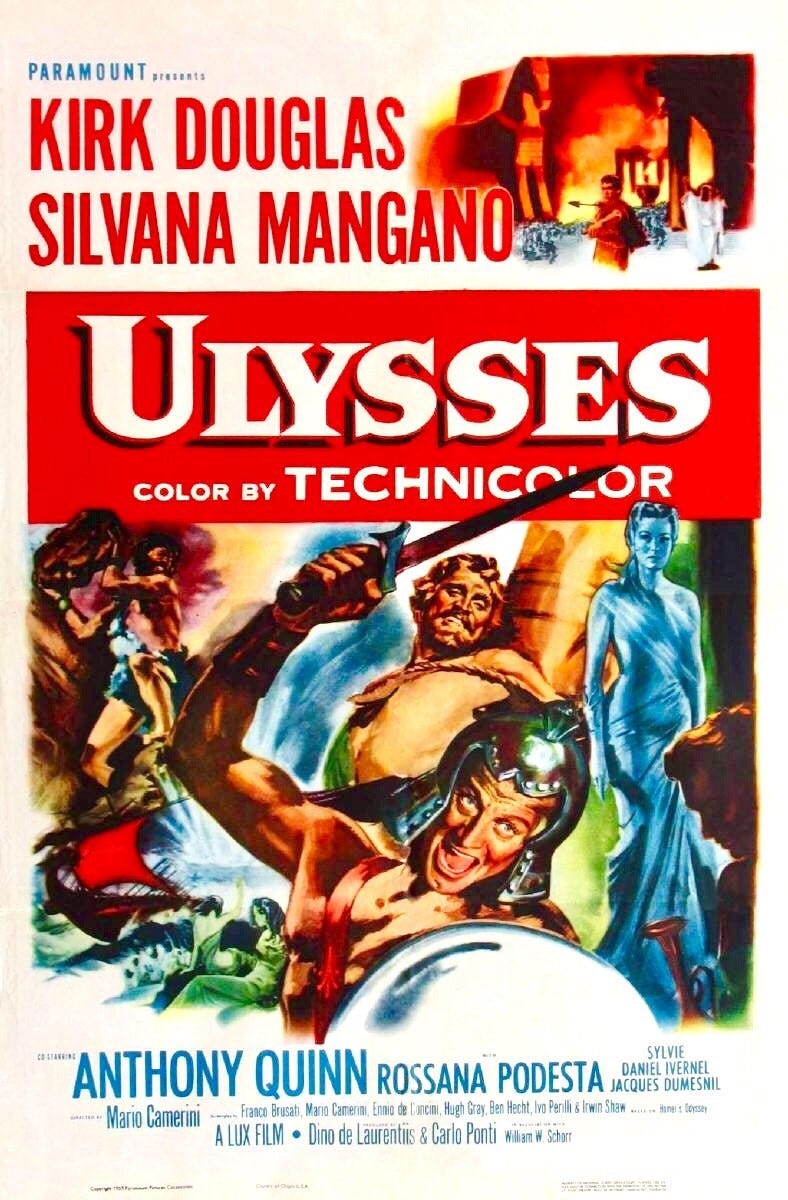
Making a film out of a 12,000-line poem is no small feat.
Because of the length of The Odyssey, arguably the world’s most famous poem, any screen adaptation of the work has to wrangle with the question of framing. How much to include? Where should the story begin or end? How many monsters and diversions make the cut? And which larger themes does each framing make us focus on as viewers?
And how, if at all, do we manage the poetry piece of things?
Over the next several weeks, we’ll see how different writers and directors have tackled this question in creating their films. Our first is perhaps the most straightforward, though not the most complete.
Ulysses (1954)
First up is Mario Camerini’s American/European co-produced Ulysses, starring none other than Kirk Douglas. Produced by Dino de Laurentiis, the film is capable enough for 1954 but lacks any sense that it’s built from a poem. It’s a straightforward period-feeling piece with fantasy elements. It’s solid, but weird.
Camerini chose to begin the film in media res, as the poem famously does. We get a hyper-condensed version of Homer’s epic from start to finish: Nausicaä, the sirens, the cyclops. The hits! Odysseus comes home and kills everyone. You know, happy ending and all that, though I was pleased to see Penelope question whether she could love a man who could be so violent (spoiler alert: she can). This, however, is a modern addition, as no such dithering occurs in the poem.
It’s a tricky business: films are adapted from novels all the time. Those films routinely include actual dialogue from the novels, narration if there’s a narrator, or other text lifted right from the pages (e.g., printed text on letters and screens). But what about a film based on an epic poem?
Should there be rhyming? Ten-dollar words? Heavily imagistic language? Why isn’t there more heightened attention to the writing here, or why doesn’t it “sound” like a poem?
There are a few problems with this idea.
The Sound of Poetry
Translation is a highly complex high-wire act, particularly when it comes to poetry. How do you even do it? In some languages, words sounds like other words: ghost and coast, in English, for example. But in French? Fantôme and côte: same vowel sound, so some assonance, but not a clean total rhyme. So in translation, how much do I try to honor the resonances between words? Their rhyme? What about the music of the lines?
In its original ancient Greek, The Odyssey was written in dactylic hexameter: lines of six (hence the hexa-) rhythmic units (or feet) that were primarily dactylic (the word “capable” in English is a dactyl: stressed-unstressed-unstressed, “CA-pa-ble”) Most translations of Homer preserve the meaning of the words in translation: not the sound of the original language.
Others have tried to have it all and replicate the sound and the meaning of Homer’s lines: Richmond Lattimore, for example, used a six-beat (i.e., hexametrical) line in his translation of the poem, but not all contemporary translations do.
Emily Wilson’s 2017 translation, which we’re listening to this summer in the PopPoetry (Audio)Book Club, uses iambic pentameter, which is more natural to the English speaker’s ear but still nods toward the rhythm of Homer’s original.
I like this deep dive into dactylic hexameter that compares the work of Childish Gambino to Homer. Contraband, contraband, contraband (contraband)! Maybe CG should have tried his hand at a translation of The Odyssey.
But in Ulysses, there are some really flat line reads and lifeless writing. No anaphora or purposeful repetition. There are some moments of nuance, but there’s also plenty of wooden, pedestrian dialogue
Where are the Homeric epithets, the oft-repeated word pairings that repeatedly describe the same image (my favorite: the “wine-dark sea.”) Perhaps there was no room for poetry because the actors’ grip on spoken language in general was so slippery.
After all, they literally weren’t speaking the same language.
Odysseus on Screen
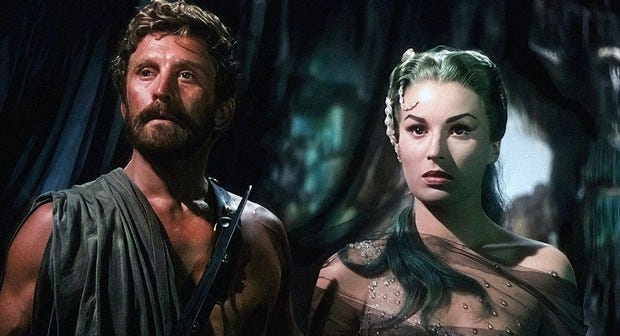
The most interesting and also the worst thing about this movie is the dubbing. During shooting, each actor spoke their native language on set. The film was overdubbed with different languages later. It seems so strange, Douglas having these intimate scenes with Silvana Mangano, who shrewdly plays both Penelope and Circe: just imagine having to act your face off and the person across from you, inches from you, is speaking a language you don’t know. All you have to go off is their expression, tone, etc.
Considering that this is how the film was made, the fact that the acting is fairly decent is a real testament to the actors’ skill. There are plenty of beautiful, well-composed shots, powerful speeches and exchanges.
It’s not all roses, though. It’s still 1954. Polyphemus looks wild as hell.


Ulysses stands the test of time despite some obvious shortcomings. It does an admirable job of trying to accommodate an awful lot of terrain in a short period of time. They gave it all they had, and it’s still pretty good.
We’re moving forward chronologically from here—see you next week!
P. S.
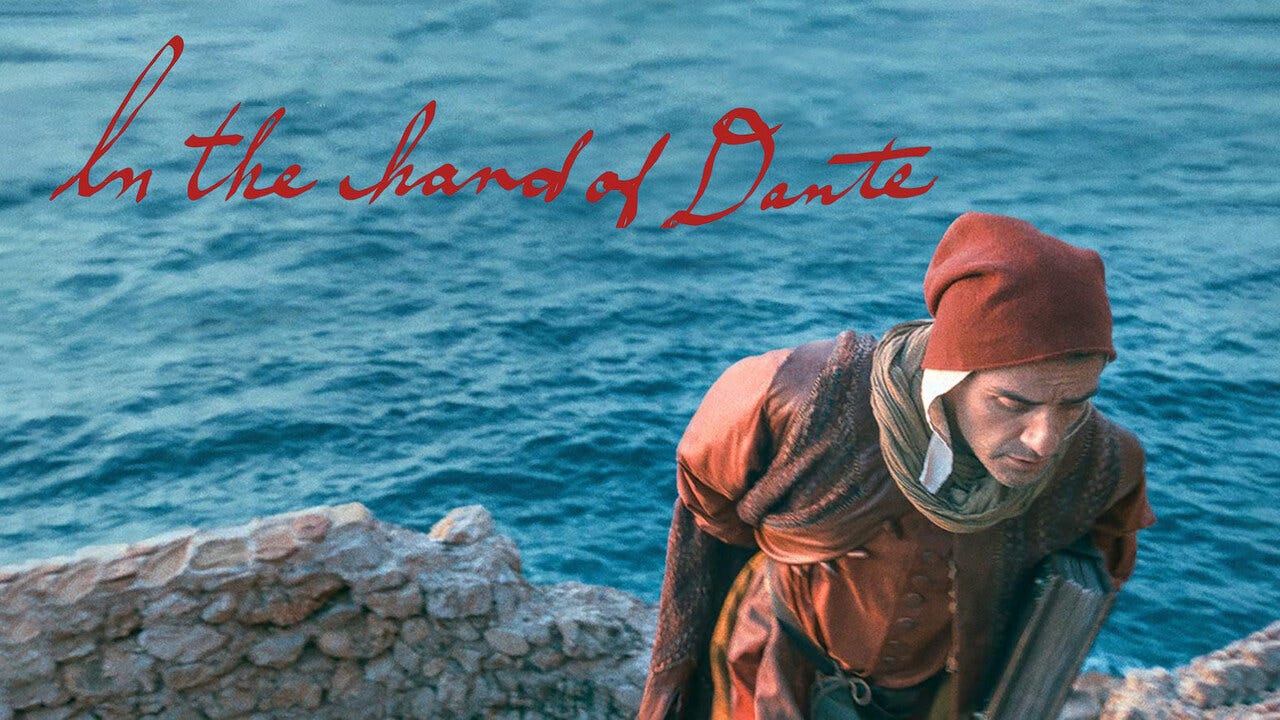
In the Hand of Dante, a film featuring two parallel stories that both center on the 14th century poet, just arrived on Netflix and stars Oscar Isaac (yay!), Gerard Butler (ok!) and Gal Gadot (no!).
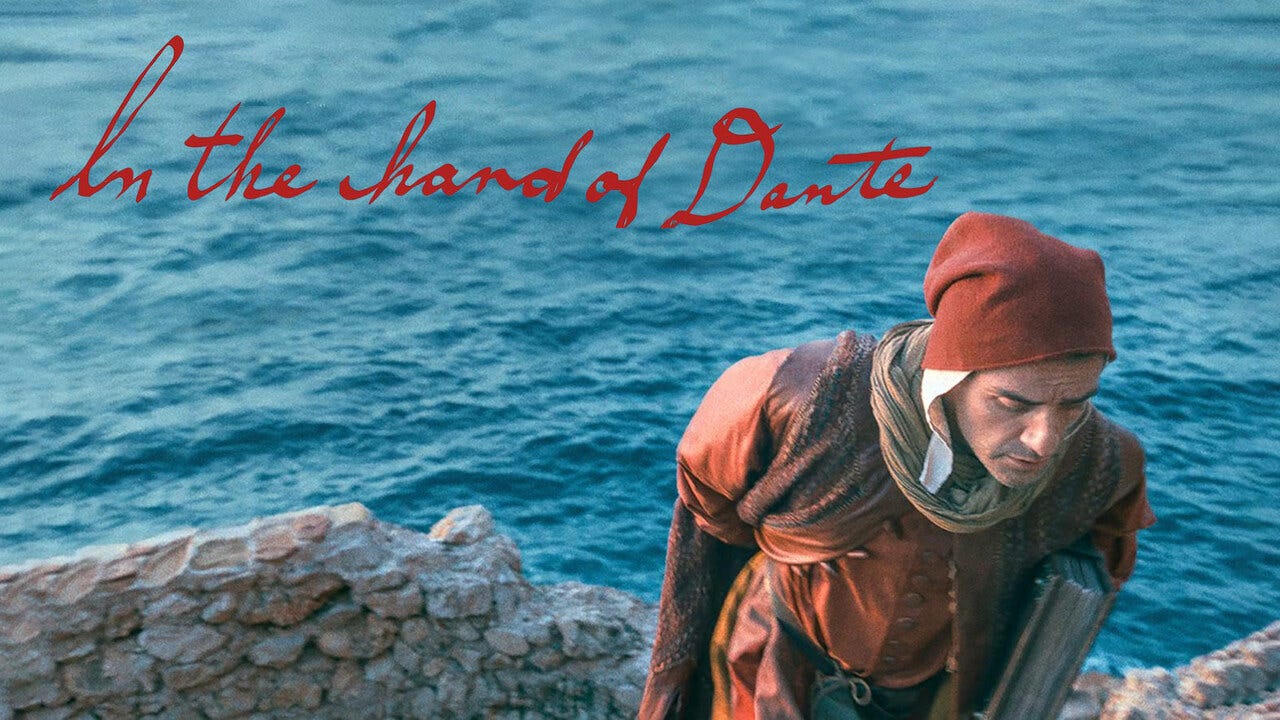
My body is ready. I already bitched about this in the Book Club chat but COME ON. I’m not into it. If he doesn’t want to record it, don’t send his avatar out to do the job!
Maybe they should have had Coogan or Brydon do it as him.
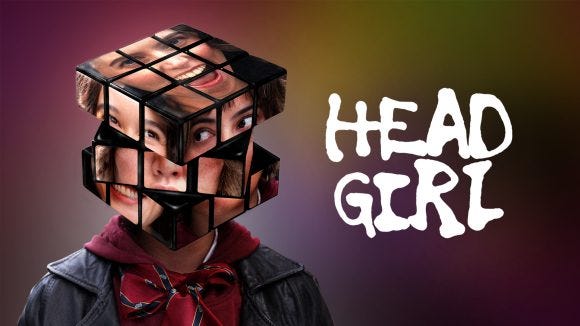
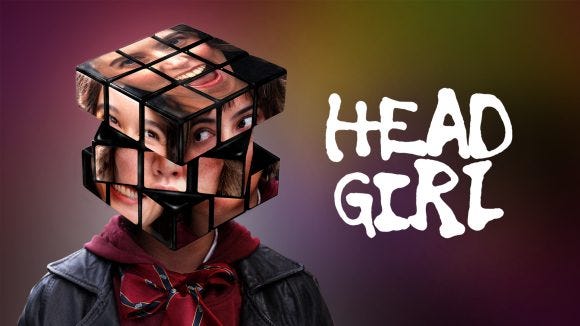
A new Kiwi TV series, Head Girl, is based on the work of real-life Aotearoa poet Freya Daly Sadgrove. No US streaming date yet. Damn!
Did you know the Academy of Country Music has a Poet’s Award? Neither did I. It honors lyrical contributions to the genre. Interesting. I feel the part of my brain where I keep the knowledge that Bob Dylan was awarded a Nobel Prize in Literature tingling.
Such a great post, Caitlin! Looking forward to your take on the next adaptation. (PS: Childish Gambino + Homer was the rabbit hole I needed today!)
Thank you for this! I look forward to your take on "The Return," which I loved. And listening to Emily Wilson's translation — what a treat that must be. I hope the audio version includes her intro, where she writes about her first exposure to The Odyssey. Pure delight. (And if you haven't seen Dr. Wilson's tattoos yet...)