


Poets on Film: Why Bright Star, Jane Campion's John Keats Biopic, Is So Damn Good
Jane Campion + Andrew Motion + Romantic Poetry = Glory

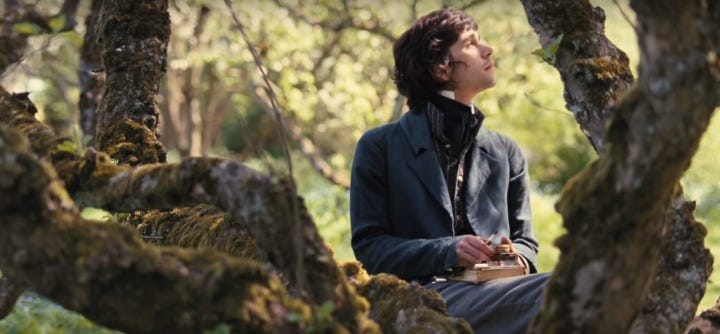
Whenever I ask poets which films featuring poets and poetry they hold closest to their heart, one title pops up again and again: Bright Star, the 2009 biopic of English Romantic poet John Keats. Not merely a fan favorite, Bright Star is also routinely lauded by critics on lists of films about writers, poet biopics, and more.
Creating an engaging portrait of a poet that’s not only enjoyable but also more or less faithful to the truth is no small task. Poets are prone to stereotype on screen, and in some ways, Keats is the picture of stereotypical poetic suffering: a genius, ignored in his time, plagued by ill health, and taken too young.
But there are several reasons why this poet biopic, in particular, is so successful. And when films about poets succeed, in some ways, poetry succeeds. For a still-niche art form, representation can matter more than we might think.
Bright Star’s Bright Ideas
What makes the film such a success? How does it succeed where others fail? Here are five reasons Bright Star still shines more than a decade after its release.
Keep reading with a 7-day free trial
Subscribe to PopPoetry to keep reading this post and get 7 days of free access to the full post archives.